Saturday, 22 April 2023

MY SPIRITUAL TRAVELOGUE - A visit to Kaladi.

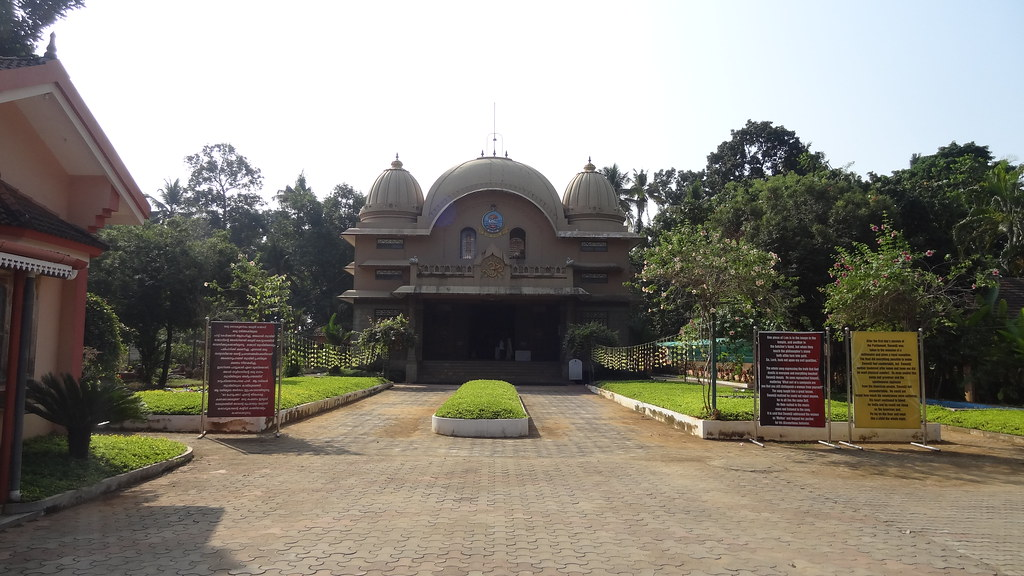
MY SPIRITUAL TRAVELOGUE - A visit to KALADI - The Birth Place of Shri Adi Shankaracharya.

After a gap of about more than two and a half years due to the corona (Covid 19) outbreak, I slowly restarted my spiritual journey, first  by visiting our family deity - Kuladeivam Sri Mahadevar temple in Ettumanoor (in Kottayam district, Kerala) to take His  Blessings.  Though we followed our planned schedule for this pilgrimage, one place which we did not think of in our schedule  suddenly flashed up in our mind, thanks to one of our relatives,  as a bubble when we were in Ettumanoor.  That was Kalady, the birth place of Sri Adi Sankaracharya.  With no time to spare, a suggestive program was chalked out with our driver sarathy for visiting Kalady.    In other words,  the destiny drew us like a river flow to Adi Shankaracharya birth place - the Kalady.  It was an experience beyond an imagination of an ordinary village side as we entered the devine place where thousands of years ago a baby's cry sphere headed the advent of a man who would show the world the path to liberation, a man would come to respect and admire as Jagadguru Adi Shankaracharya.  

We started at 8.00 a.m. after finishing all our refreshments to cover up  a distance of about 75 Km - 2 hrs travel in a van.  With intermittent break-ups on the way, we reached Kalady past mid-day, by that time the temple was closed and we were waiting there for its reopen at 4.00 p.m.

Kaladi or Kalady is a tiny hamlet located near Aluva (22 KM) of Ernakulam district in Kerala, the nearest railway station being Angamali (8 KM) and the nearest airport being Kochi international airport (7 KM).  Kalady in Malayalam language means 'footprint' which was once called as 'Sasalam'.  Kalady was rediscovered and came into prominence late 19th century by the then Shankaracharya of Sringeri and subsequent consecration of a temple for Adi Shankaracharya in 1910.

Kalady is the Holy birth place of the great human alien and philosopher Adi Shankaracharya. Though born in the southern extremity of India in Kerala, Adi Shankaracharya travelled the length and breadth of India, not once or twice but thrice.  What he achieved in his short life span of 32 years cannot be achieved in 32 lifetimes of any other gurumars.  The place is blessed with many important temples including shrines dedicated to Sri Shankara, Sharda Devi, Sri Krishna and Sri Ramakrishna.  Festival celebrations here are solemn events that attract believer in large numbers.  Jagadguru of Adi Shankara Bhagavadpada, a pre-eminent center for inspiration on the banks of the Poorna river that purifies the mankind in thought, word and deed. 
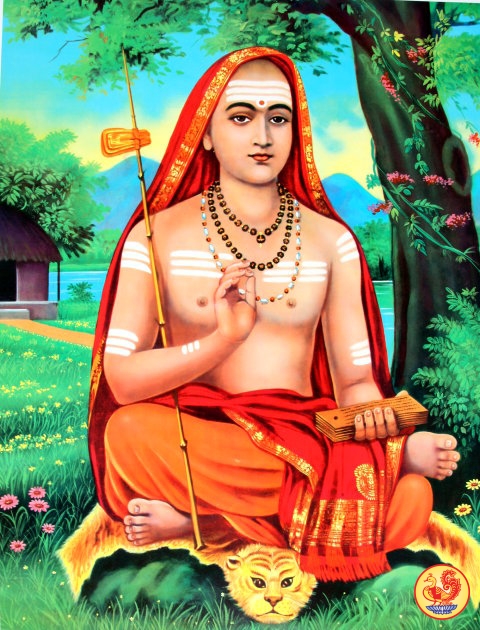
works by Shri Adi Shankaracharya

Jagadguru Shankaracharyas of Sringeri, Dwaraka. Badari and Puri jointly conveyed a message - "A visit to Kalady increases tranquility, self restraint and other eminent virtues of those engaged in the pursuit of knowledge.  

It is the duty of every common man to visit the Holy Kalady, the birth place of Adi Shankara and more so for any aspirant for liberation, the sanyasi and those who follow the Advaita school of thought."

Kalady, the birth place of Sri Adi Sankaracharya during the 8th century.  This place where Shankara was born and raised was unknown to us for several centuries.  A 100 years ago,  through the 33rd Jagadguru of the Sringeri Sharadha Peetam the first and the foremost institution established by Shri Adi Shankaracharya to convey His teachings brought about the change.

Kalady is also known as Adi Shankara Janma Bhumi Kshetram, on the banks of the Holy river Poorna (Periyar).  He was a shining spiritual light, intellectual giant and a genius of linguistics, the level of wisdom and knowledge He showed at a very early age made him a shining light for humanity. He illuminated the land of Bharat with His teachings that are still as impactful as ever.  He was a prodigal child and an extraordinary scholar with almost super human capabilities.  

    At the age of 2 - he could fluently speak & write                  Sanskrit,

    at the age of 4 - could recite all the Vedas and 

   at the age of 12 - took sanyasa and left his home in             Kalady. 

He left his body at the age of 32.  Between the age of 12 and 32 he travelled widely throughout the country. 


As there was plenty of time for the  temple to reopen, we wandered the nearby places.  We came across Sri Krishna temple, also known as Thirukaladiappan Temple.  Shankara's mother used to walk a long distance every day to have her bath in the Periyaru (Poorana river) and worship Lord Krishna in the temple.  Her old age did not stop her from this habit.  Shankara felt sorry for her mother and prayed to Lord.  A voice from the space descended down told Shankara that the river would flow to his place where he placed his feet.  It was a miracle that the river began to flow at the spot near Shankara's house.  From that time onwards the village which was till then known as Sashalam came to be known as Kaladi.  In gratitude, Shankara built a temple for his family deity and installed Tirukaladiappan - Sri Krishna.  Shankara performed the first Aarattu Vizha for Kaladiappan and his mother was happy to continue her prayers without any difficulty.  The idol of Lord Krishna is 3.5 feet tall and made of Anjana stone that has high properties of iron and copper.  A powerful idol.  Only Guruvayur and Kaladi temples have this kind of idols.  At the right to Lord Kannan sannidhi, Sivan, Parvathy  and Ganapathy sannadhies are there.  Parasuramar, Ayyappan and Adhi Shankara sannadhi are also available  Akshaya Thrithiya is being celebrated in this temple with elaborate pooja and arrangements. Lot of crowd gather at this time.

Thirukaladiappan Temple
 

The historical legendary goes like this - Throughout the course of his early life, Shankara astounded many with his knowledge intelligence.  He started writing his own analysis of the Upanishads, BrahmaSutra and the Bhagavad Gita at a young age.  Right from his childhood, he was keen on becoming a monk or sanyasi.  Adi Shankara's mother Aryaamba did not agree with his desire to become a monk. Legend says that one day, Shankara was touched by a dog and, as per custom followed by the community Shankara had to take a bath.  Accompanied by mother, Shankara went to river Poorna to bathe.  While in the water, a crocodile got hold of his leg.  The drowning Shankara told his mother that the crocodile would leave him alone if she would allow him to take up sanyasa. Helpless mother Aryaamba agreed, and the crocodile freed Shankara.  This place is even today called as '"Muthala Kadavu" or "Crocodile Ghat" where Shankara's life turned to sanyasa/monk.


Holy Crocodile Ghat


After visiting the Crocodile Ghat, we entered inside the temple.  There are Sri Sakti Ganapati, Sri Sharadamba and Adi Shankara deities sannadhi are there.  Samadhi of Aryamba (Holy mother of Sri Shankara) is also there.  The temple draws large number of devotees and pilgrims especially during Sri Shankara Jayanthi and Sarada Sarannavarathri festivals.  Pilgrims and tourists from all parts of India and abroad visit this temple for spiritual solace and peace of mind.  By the time we finished our darshan and prayers, a heavy downpour made us to wait inside the temple.  We had the opportunity of having a glance of  the  colourful art work of Shri Shankaracharya's life history painted beautifully on the walls,  which will never fade easily from our memories. 

As a legendary narrates - When Adi Shankara was a young boy, as a student of Gurukula, he visits houses and seek alms(biksha from gragastas) for food and share whatever they receive with fellow students and Acharya (tacher) which is customary in Hindu Gurukul system.  One day, when he visited a poor woman's house, she didn't have anything to offer and did not want the young boy to go without any offering from her side.  She searched everywhere inside her house and could not find anything but a little bit dried gooseberry.  She felt very sorry for such an offering to the boy and explained her inability to serve him with better one.  Adi Shankara realised the poor lady's bakthi and selfless attitude and felt pity for her.  He prayed to Goddess Mahalaxmi through his composition of Kanakadhara Sthothram, the first hymn which Adi Shankara composed.  In praise of their bakthi, Goddess Mahalaxmi poured gold gooseberries on the poor lady hut, showered Her blessings and alleviated her poverty.  Even today it is believed that poverty would be banished by singing this hymn.  The house (Swarna Mana or Punnorkode Mana,  situated 16 KM from Aluva and 23 KM from Kaladi) where this happened still exists in Kaladi.  There is a temple for Goddess Sri Kanakadhara Mahalaxmi


Under the guidance of his guru Govinda Bhagavatpada, he mastered almost all the ancient religious scripts in short time.  He travelled across India, propagating Advaita Vedanta.  His teachings were challenged by many philosophers and thinkers.  He was even involved in a number of debates pertaining to Hinduism and its beliefs, but Shankara managed to astound all his doubters with his intelligence and clarity.  He then went about propagating his ideas and was soon accepted as a Guru by many.  Shankara came to be known as Shankaracharya among his disciples.  He has choosen four of his deciples (ardent followers)  to head the four monasteries (mutts) founded by him.  They are Padmapada for Govardhana Mutt which is a part of the famous Jagannath temple in eastern part of India,Jyotirmata Mutt for Totakacharya in the northern part of India,  Hasta Malaka for Dwaraka Mutt in the western part of India and Sureshvara for Sringeri Sharada Mutt in the southern part of India. The monasteries founded by him had a great influence in reforming Hinduism.


At the age of 32, Adi Shankaracharya retired to the Himalayas and is believed to have entered a cave near Kedarnath.  He was never seen again and the cave that he entered is considered as his final resting place.

His philosophical works include review of Brahma Sutra, commentaries on Bhagavad Gita, ten principal Upanishads, many stotras, poems praising gods & goddesses, and famous Upadesasahasri etc. An exhaustive list of all his works are given below, as seen in Vivekavani.

Even today,  many scholars wonder how Acharya wrote so  much in a very short lifespan of 32 years. Undoubtedly it shows that he was the greatest scholar and a man on a mission to teach & establish the philosophy of Advaita. Though the majority of his works concentrate on Advaita, he equally penned on bhakti since he believed that bhakti was a very essential step for Chiththa Shuddhi without which self-realisation was not possible. Hence he composed verses and hymns in praise of every lord, the majority of which were concentrated on Vishnu, Shiva, and Shakthi. He wanted the people to worship the lord in any form of their wish, the results of which must finally purify their mind and make it fit for self-realisation. From his life history, it is evident that he was blessed by Lord Narasimha, Goddess Saraswati, and Lord Vishvanatha. Hence one can find a true Vaishnava, Shaiva and Shakthi in him. The most highlighting factor is the baashya for Hastamalakeeyam written by Shri Shankaracharya since rarely a Guru has written baashya for the work of his own disciple. Below is the list of works by Shri Adi Shankaracharya which are widely accepted to be his works.

BHASHYA GRANTHAS

  1. Brahma Sutras
  2. Isavasya Upanishad
  3. Kena Upanishad
  4. Katha Upanishad
  5. Prasna Upanishad
  6. Mundaka Upanishad
  7. Mandukya Upanishad
  8. Mandukya Karika
  9. Aitareya Upanishad
  10. Taittiriya Upanishad
  11. Chandogya Upanishad
  12. Brihadaranyaka Upanishad
  13. Sree Nrisimha Taapaneeya Upanishad
  14. Bhagavad Gita
  15. Vishnu Sahasranama of
  16. Sanat Sujatheeyam
  17. Lalita Trishati
  18. Hastamalakeeyam

PRAKARANA GRANTHAS

  1. Vivekachudamani
  2. Aparokshanubhuti
  3. Upadesasahasri
  4. Vaakya Vritti
  5. Swatma Nirupanam
  6. Atma bodha
  7. Sarva Vedanta Sara Samgraha
  8. Prabodha Sudhakaram
  9. Swaatma Prakasika
  10. Advaita Anubhuti
  11. Brahma anuchintanam
  12. Prashnouttara Ratnamaalika
  13. Sadachara anusandhanam
  14. Yaga Taravali
  15. Anatmasree Vigarhanam
  16. Swaroopa anusandhanam
  17. Pancheekaranam
  18. Tattwa bodha
  19. Prouda anubhooti
  20. Brahma Jnanavali
  21. Laghu Vakyavritti
  22. Bhaja Govindam
  23. Prapancha Saaram

HYMNS AND MEDITATION VERSES

  1. Sri Ganesa Pancharatnam
  2. Ganesa Bhujangam
  3. Subrahmanya Bhujangam
  4. Siva Bhujangam
  5. Devi Bhujangam
  6. Bhavani Bhujangam
  7. Sree Rama Bhujangam
  8. Vishnu Bhujangam
  9. Sarada Bhujangam
  10. Sivananda Lahari
  11. Soundarya Lahari
  12. Ananda Lahari
  13. Sivapaadaadi kesaanta varnana
  14. Siva kesaadi padaanta varnana
  15. Sree Vishnu-paadaadi-kesanta
  16. Uma maheswara Stotram
  17. Tripurasundari Vedapada Stotram
  18. Tripurasundari Manasapooja
  19. Tripurasundari Ashtakam
  20. Devi shashti upachara-pooja
  21. Mantra matruka Pushpamaala
  22. Kanakadhara Stotram
  23. Annapoorna Stotram
  24. Ardhanareshwara Stotram
  25. Bhramanaamba Ashtakam
  26. Meenakshi Stotram
  27. Meenakshi Pancharatnam
  28. Gouri Dasakam
  29. Navaratna Malika
  30. Kalyana Vrishtistavam
  31. Lalitha Pancharatnam
  32. Maaya Panchakam
  33. Suvarna Mala Stuti
  34. Dasa Sloki
  35. Veda Sara Siva StotramHara
  36. Siva Panchaakshara Stotram
  37. Sivaaparadha Kshamapana
  38. Dakshinamoorthy Ashtakam
  39. Dakshinamoorthy Varnamala
  40. Mrutyunjaya Manasa Pooja Stotram
  41. Siva Namavali Ashtakam
  42. Kaala Bhairava Ashtakam
  43. Shatpadee Stotram
  44. Siva Panchakshara Nakshatra Mala
  45. Dwadasa Ling Stotram
  46. Kasi Panchakam
  47. Hanumat Pancharatnam
  48. Lakshmi-Nrisimha Pancharatnam
  49. Lakshmi-Nrisimha Karunarasa Stotram
  50. Panduranga Ashtakam
  51. Achyuta Ashtakam
  52. Sree Krishna Ashtakam
  53. Hari Stuti
  54. Govinda Ashtakam
  55. Bhagavat Manasa Pooja
  56. Praata Smarana Stotram
  57. Jagannatha Ashtakam
  58. Guruvashtakam
  59. Narmada Ashtakam
  60. Yamuna Ashtakam
  61. Ganga Ashtakam
  62. Manikarnika Ashtakam
  63. Nirguna Manasa Pooja
  64. Eka Sloki
  65. Yati Panchakam
  66. Jeevan Mukta Ananda Lahari
  67. Dhanya Ashtakam
  68. Upadesa (Sadhna) Panchakam
  69. Sata Sloki
  70. Maneesha Panchakam
  71. Advaita Pancharatnam
  72. Nirvana Shatakam
  73. Devyapara-dha kshamapa stotra

Courtesy: VivekaVani

Some of the other interesting and important places to visit in Kaladi are -

1.  Shringeri Mutt

2. Sri Krishna Temple

3. Holy Crocodile Ghat

4. Sri Ramakrishna Advaita Ashram

This Ashram or Math in Kalady is a branch of the Ramakrishna Math & Ramakrishna Mission (HQ) of the Belur Math, West Bengal.  Started in 1936 and made a branch centre of the Math in 1941.  This math established  Schools for Nursery, Junior Basic, Sanskrit Upper Primary,  Secondary and Higher Secondary.  


Sri Ramakrishna Advaita Ashram, Kalady

5. Sri Adi Shankara Keerthi Sthambha Mandapam established by Kanchi Kamakoti Peetam.  

This is an eight-story memorial built by Kanchi Kamakoti Math.  At the entrance, there are two elephant statues guarding the memorial. After entering you can see the Paduka Mandapam.  From there, one can climb to the eight story through well laid easily climbable circular steps.  While climbing up one can witness enjoy the paintings, beautiful goddess scilptures on the side walls as well as in the centre portion along with adi shankara life history - a very rare feast to the eyes.


After a devineful and blissful  darshan and  with hearty contentment , we headed to visit another important place in our schedule - i.e. Chotanikara Sri Bhagavwati Amman temple.


Jaya Jaya Shankara...Hara Hara Shankara


Sunday, 19 March 2017

My Spiritual Travelogue - Visit to Arulmigu Sri Thrumalazhagi SamedhaSri Damodhara Swamy Temple, in Damal, Kancheepuram Dist., Tamilnadu.

DAMAL is a small village in Kancheepuram District, which is about 86 KM from Chennai, situated on the Chennai - Bangalore national highway (NH4) and from Kancheepuram, it is about 15 KM.  A beautiful village, surrounded by lush greenery vegetation, less populated, calm and quite village suburb, away from the densely populated metro.  There is no railway station near to Damal. Major railway station nearer to Damal is Katpadi Junction which is about 56 KM away and the Kancheepuram R.S. which is about 15 KM, located nearby.      


Thirupukuzhi (3 KM), Musaravakkam (4KM), Sirunaiperugal (4KM), Vishar (8 KM) are the nearby villages to Damal.  Damal is surrounded by Vembakkam Taluk towards South, Kanchipuram Taluk towards East, Kaveripakkam Taluk towards West, Arkonam Taluk towards north.  

Damal village is bordered by Kancheepuram District and Tiruvannamalai District and Vellore districts on three sides.


As per legendary tales it is said that this village was originally known as Dhana Mallapuram.  About three centuries ago, this village was given to Vaishnavite clan  as charity or "தானம் " by the Madhwa clan.  Over period of time, the name Dhana Mallapuram was shortened to be called as Damal.  

Few temples are situated in this village and to name them - they are Sri Drowpathi Amman Temple, Sri Manthaiveli Maari Amman Temple, Damal Sri Damodaraaya Perumal Temple (also known as Sri Thirumalazhagi Samedha Damodara Perumal temple, Varaheeswarar Temple and Ponniyamman Temple.  

Sri Thirumalazhagi Samedha Damodara Perumal temple is a small beautiful temple surrounded thickly inside by many kind of flowering plants which presents like a temple in the midst of a beautiful brindavan.

கோயிலின் நுழைவாயில் 
Sri Damodara Perumal and His concert is Sri Thirumalazhagi, a name given in Tamil language.  As per Indian Mythology, Lord Vishnu or Narayana had taken two full avathara - பூரண அவதாரங்கள்.  One avathara was as a stately prince - Lord Sri Rama and the other avathara was Lord Krishna to protect Dharma and to spread peace and love on earth.  

The name Krishna was given to him because of his skin color - in Sanskrit Krisna means the color of night which is dark.  Krishna is portrayed as an attractive young boy with bright eyes and divine glow on his dark or blue skin playing a flute.  He is a mischievous boy who had an infinite liking towards butter and curd.  He would steal them from the neighbour houses with his friends and consume them.  When neighbours complain about Krishna mischievousness to His mother Yasodha, she decided to punish Krishna for his wrong doings.  So she tied Krishna with a rope to a wooden mortar as punishment.  Krishna got himself marked by the rope as a sign of his getting bound by those who love him dearly.  Even today, one can see the tied rope markings on Krishna at the Moolavar sannadhi at this temple.  This is how Lord Krishna got his name Damodaran (Damu + Utharan which means Damu is rope and Utharan is one who got the markings of the tied rope in his belly.) and presents himself in standing posture for the devotees in Damal.  Lord Perumal gives darshan to His devotees as Damodaran only in this temple and nowhere He can be seen as Damodaran.  Some of the other details pertaining to the Sthala Puranam are given in the board as given below which can be seen inside the temple.


ஸ்தல புராணம் வரலாறு

உட்புற விமானத் தோற்றம் 


One can also see the horoscope of Lord Rama, Lord Krishna and Lord Hanuman in a board kept inside the temple.


Temple view from the highway 

Thrughout the Tamil year Chithrai to Panguni, various festivities to the deities in the temple are being performed, attracting devotees in large numbers from nearby villages.
Inside the temple, a beautiful garden laid with thick flowering plants gives a gives a rich greenery surrounding to the eyes.  

Some of the garden pictures inside the temple :-


Bilva tree


There is a tree under which Lord Damodara swamy's lotus feet kept in a peetam.  A notice board on the tree displays that whoever wanting to have child can pray to Lord Damodara swamy for a child and tie a pair of anklet on this Lotus feet on a particular day - which happens to be a Rohini star day, with full devotion, they will be blessed with a child - a staunch belief  being observed by the devotees even today.

Sannadhi for Sri Anjaneya
A small rest house is there on the left side of the temple entrance where one can avail a short rest before or after visiting the temple.

Small rest house
The temple is open for darshan from 6.30 a.m. to 8.00 p.m. every day, with breaks for lunch time in between.  On special occasions,  request can be made to the conce


Sri Varageeswarar Temple:

Nearby, there is a temple for Lord Shiva,  called asSri Varageeswara Temple with a sannadhi for His concert for Sri  Gauri Ambal.    The temple architecture resembles to Chola, Pallava and Vijayanagara dynasty period.  As per puranic legend to this temple, Lord Vishnu after his varaha avathara did not return back to vaikundam.  Devas requested  Lord Shiva to make Lord Vishnu to come back to vaikuntam .  Lord Shiva took the form of a hunter and threw an arrow on Varaha and then Lord Vishnu realised  the reason why he took Varaha avatar. Hence, here Lord Shiva is valled  Sri Varageeswarar in this temple.  

This is a beautiful temple, large  spacious corridor around the mantap and the deities sannadhi.   


There is a 'Bilva' tree in the corridor which has got a significance of  having five leaves in a string, a rare one to see anywhere.  Bilva or Belpatra leaves are from Bel tree.  Bilva leaves is an important item while worshipping Lord Shiva.  This leaf is considered to be trifoliate which signifies the holy Trinity - Brahma, Vishnu and Shiva,, also signifies the three eyes of Lord Shiva.  Lord Shiva is very fond of Bilva leaves.  It is said, doing puja to Shiv Linga with Bilva tree leaves the Lord blesses them with their desires.  According to Skanda Purana, the Bel tree grew from the sweat droplets of Goddess Parvati which fell on the Mandrachal mountain.  Hence, it is believed that the Goddess resides in this tree in all Her forms - be it root as Girija, trunk as Maheshwari, branches as Dakshayani, leaves as Parvati, fruit as Katyayani and flower as Gauri.  Goddess Lakshmi also resides in this sacred tree.  Hence, Lord Shiva is extremely fond of its leaves.  Apart from these legendary tales,  the leaves have got great medicinal  values as per Ayurveda scriptures.    The roots, skin, leaves, fruit etc. of this tree are used to cure various ailments.  

From the entrance, we can enter into the  main sannadhi situated for Lord Sri Varageeswarar in the form of Linga.  On top of the Linga there is a window opening through which sun rays are reflected on the Linga on a particular day in a year (every year) which is considered to be very auspicious.  

A separate sannadhi is there for His consort Sri Gauri Ambal.


A separate sannadhi is there for His consort Sri Gauri Ambal.


There are eight Lord Bairava sculptures (Sapta Bairavas) on the pillars around the temple  which is very rare to see anywhere.    Some of them are reproduced below:


A separate sannadhi is there for Lord Subramanya along with His consort Valli. Opposite to this, sannadhi is there for Lord Vigneswara.


Sannadhi for Navagraha is also there.


Since the priest resides nearby, he can be contacted through his mobile phone number which is displayed on the wall, if the temple is closed.


Thursday, 6 October 2016

My Spiritual Travelogue - Visit to Arulmigu Sri Ranganatha Perumal Temple in Thiruneermalai, near Chennai, Tamilnadu.


THIRUNEER MALAI is a city suburb, in the outskirts of Chennai, located between Pallavaram and Tambaram railway route, just about 4 KM from Pallavaram/Chromepet railway station and is famous for its hill top temple dedicated to Lord Vishnu - Arulmigu Sri Ranganatha Swamy Temple. Good transport facilities viz. public transport, taxi or auto etc. are available to reach this place.   Chennai International Airport is just 6 K.M. away from this temple. The uphill temple presents a beautiful panoramic view of the Pallavaram area surrounding the hill, with scenic greenery vegetation; the cool breeze laced with herbal aromatic fragrance when braces us rejuvenates our body and soul both divinely and spiritually.  Other names by which this Thiruneermalai Kshethram is called are "Thoyagiri Kshetram" and "Thothadri".  Thoya means "Water" and Adhiri means "Mountain" (malai). Since the mountain is surrounded by water, this sthalam is named as "Thiru Neermalai.  Apart from the above, this location also presents as a beautiful tourist spot.


A view of the hill top temple 


Panoramic view of the Pallavarama area surrounding the Hill top


This temple is one of the 108 Vaishnavite shrines under 'Divya Desam' and belongs to a period more than 2000 years old, as mentioned in a Tamil culvert found inside the temple


A Tamil culvert inside the temple
Divya Desams are temples where Azhwars worshipped Lord Vishnu, as the presiding deity.  The Azhwars during the early medieval period of Tamil history (between the 7th and 10th centuries CE) worshipped Vishnu and his avatars through their hymns. This collection of their hymns is known as Divya Prabhandham. These Azhwars when worshipped a temple through their hymn, then these temples become Mangalasasanam temples which means "praying that the holy shrines be happy all the time".  Their divine hymns are popularly known as Nalayira Divya Prabantham (நாலாயிர திவ்யப்  பிரபந்தம் ) The Divya Prabandham is in the form of adoration of the deities of 108 temples (Divya Desams). The hymns verses in simple Tamil explain what the Vedas, Upanishads and Vyasa's Brahmasutras say.


A Divya Desam (Tamil: திவ்ய தேசம்) is one of the 108 Vishnu temples that are mentioned in the works of the Tamil Azhwars (saints). Divya means "premium" and Desam indicates "place" (temple). Of the 108 temples, 105 are in India, one is in Nepal, and last two are outside the Earthly realms.  The last two are Thirupalkadal and Paramapadam.  Tirupalkaddal is the ocean of milk and paramapadam is the Srivaikuntam where lord Narayana resides. Only holy souls are blessed to worship these two Divya Desams after death and surrender under the lotus feet of Narayana. The Divya Desams are revered by the 12 Azhvars in the Divya Prabandha, a collection of 4,000 Tamil verses.

The presiding deities Lord Vishnu/Perumal in these Divya Desams are found in various Thirukkolams (postures) - Kidantha Thirukkolam (Sleeping posture) in 27 Divyadesams, Veetrirundha Thirukkolam (Sitting posture) in 21 Divyadesams, Nindra Thirukkolam (Standing posture) in 60 Divyadesams.

The presiding deity Lord Vishnu gives darshan to His devotees from different direction in different Divys Desam shrines.   In these 108 Divya Desams, which are as follows:

Towards East direction 79 Divyadesams
Towards West direction 19 Divyadesams
Towards North direction 3 Divyadesams
Towards South direction 7 Divyadesams

Tamil Azhwars Thirumangai Azhwar, Peyyazhwar, Thirumazhisai Azhwar, and Boothaththazhwar  mentioned about this temple in their Pasurams ' Naalayira Divya Prabhandham' - 4000 Tamil verses.


To mention a few - - Tirumangai Azhwar in his  Tamil Pasuram – 1068-77, Peyaazhwar in his Pasuram – 2297, Tirumazhisaiazhwar in his Pasuram – 2416 ( as found in Naalaayira Divya Prabhandam) worshipped the Lord Vishnu here in this temple through their hymns.

A great Tamil Scholar Sri Pillai Perumal Iyengar who sang 108 Tirupathi Anthathi also sang about the location of the 108 Divya Desam in a very clear understanding way chronologically  - 

"ஈரிருபதாம் சோழம் ஈரொன்பதாம் பாண்டி,
ஓர் பதின் மூன்றாம் மலைநாடு, ஓரிரண்டாம் சீர்நடு நாடு
ஆறோடீரெட்டு தொண்டை அவ்வடநாடு ஆறிரண்டு
கூறுதிரு நாடு ஒன்றாக் கொள்" !

The  temple complex is consisting  of  two parts - one temple at the foothill and another temple at the hilltop.  In these two temples, Lord Perumal gives darshan to devotees in four postures - standing as Sri Neervanna Perumal - (நின்ற கோலம்), walking as Sri Ulagalanda Perumal (நடந்த கோலம்), sitting - as calm Sri Narasimha (இருந்த கோலம் ​), and lying as Sri Ranganatha Perumal (கிடந்த கோலம்).  

  
Two views of the base temple


Temple Gopura


At the base temple, the Lord appears in standing posture - 'Neervanna Perumal'.  As per the legendary details  Saint Valmiki after worshipping Lord Vishnu as Sri Ranganatha Perumal in Kidantha kolam, Sri Narasimhar in Iruntha kolam, Sri Thiruvikraman in Nadanthankolam, he came to worship Lord Rama at the base temple.  Here the Lord gave darshan as Sri Rama with his consort Sita Devi as Lakshmi Pirati, Aadishesha as Lakshman, Sangu and Chakram as Baratha and Satrukna, Lord Vigneshwar as Sugreeva and Garuda as Hanuman. 


It is that significance this temple has got blesses those whose marriage has been delayed or not happened for long time will get their wish fulfilled when they come to this temple and pray to the Lord.  

Another significance to this kshethram is  that Lord Thirumal (Vishnu) has eight 'Sayanams' - "Ashtavidha Sayanams"  lying postures in different places.  Those are - Vadapathra Sayanam in Sri Villiputhur, Veera Sayanam in Trivellore, Thala Sayanam in Thirukkadal Mallai, Utthana Sayanam in Thirukudanthai, Tharpa Sayanam in Thirupullani, Bhujanga Sayanam in Sri Rangam, Boga Sayanam in Chidambaram and here in Thiruneermalai - Manicka Sayanam.   

Yet another significance attached to this temple is that this kshethram is known as 'Swayamvakta Kshethram - that is this place manifested by its own without any manly efforts, to bestow Their gracefulness and serve all kinds of livings, non livings etc. in the universe.  There are eight kshethrams in this category - they are  Sri Rangam, Sri Mushnam, Tirupati, Salakgramam, Naimicharanyam, Pushkaram, Badri and Thothari (alias) Thiruneermalai.  

Yet another importance as found in the temple record is that the Empress of Carnatic Music Bharath Rathna Smt. M.S. Subbulakshmi - Sri Sadasivam got married in this temple only.  

One more significance this temple bears is - Lord Perumal gives darshan to devotees only in one posture in other kshethrams,  but here in Thiruneermalai, the Lord gives darshan in four postures - standing, walking, sitting and lying.   More so, there are separate sannadhies in this temple for Sri Ramar, Sri Andal, Sri Anima Malar Devi, Sri Anjaneya.  


Sri Anjaneya Sannadhi
Sri Anima Malar Devi sannadhi


Sri Ramar sannadhi
The temple in the hilltop is one of the famous and very significance attached   hill top temples dedicated to Lord Vishnu.  The hill is spread to a wide span of 15 acre area.  There are 200 steps to climb for one to reach the temple.  The main Gopura faces the south direction.  The main deity Sri Ranganathar in lying posture south, facing eastern side Sri Thrivikrama in walking posture, and Sri Santha (calm) Narasimha in eastern side in sitting posture are giving darshan to devotees. Opposite to the Perumal sannadhi, His consort Thayar sannadhi is located facing east.  


Entranace to the uphill temple


Steps to the uphill temple and a way to Sri Hanuman temple 


View of the uphill temple 


About 2000 years back, Saint Thirumangai Alwar came to this place to worship the Lord Perumal.  At that time, the hill was surrounded by water and he could not reach the temple to worship the Lord.  He stayed in a place Manthragiri (Thirumangaipuram), opposite to the temple, waited there for six months and when the water receeded, he reached the temple and happily worshipped the Lord.

In this kshethram, four Devine water sources (Pushkarani) are located viz. Sheera Pushkarani, Karunya Pushkarani, Swarna Pushkarani and Siddha Pushkarani.  As per Lord Krishna's saying  in Brahmanda Puranam, Arjun bathed in these Pushkaranies and got rid of his sins.  

Important festivals being celebrated in this temple are Vaikunta Ekadasi and the annual Brahmotsavam during the Tamil month Chittirai, Panguni Utthiram are some to mention during when very large pilgrim crowd gathers here to worship the Lord.

Foremost place of prayer:  As seen in the legendary tales, in the literary evidences and in available culverts, this kshethram is considered to be one among the foremost places of prayer.  It is believed that a day of holy deeds done in this kshethram is equivalent to several years of holy deeds done in other kshetherams.  With these significances, this kshethram attracts lots of devotees from different parts of the country to worship Lord Vishnu here.  

Prayers being offered at this temple are -  those who are married but don't have a child when they come out of the hilltop temple after offering their prayers for a child, tie in the sthala virutcham tree 'veppalai' (ஸ்தல விருட்ச மரம் - வெப்பாலை)  a cloth containing a small black stone (கருங்கல்) along with  1 Rupee and when their prayers are answered by the Lrod (after the child birth) they come to this kshethram and  

Temple Open timings:  Daily in the morning from 7.00 a.m. to 12.00 noon
                                            in the evening from 4.00 p.m. to 8.00 p.m. 
The above timings are  subject to change during festival and important days.  


வணக்கம் 


page84image6416