Thursday, 24 April 2014

Visit to Perungalur Temple

My Spiritual Travelogue - Visit to Perungalur


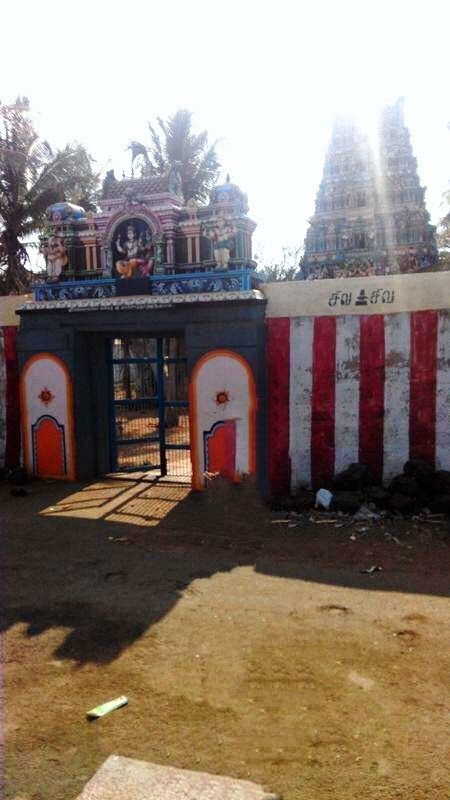
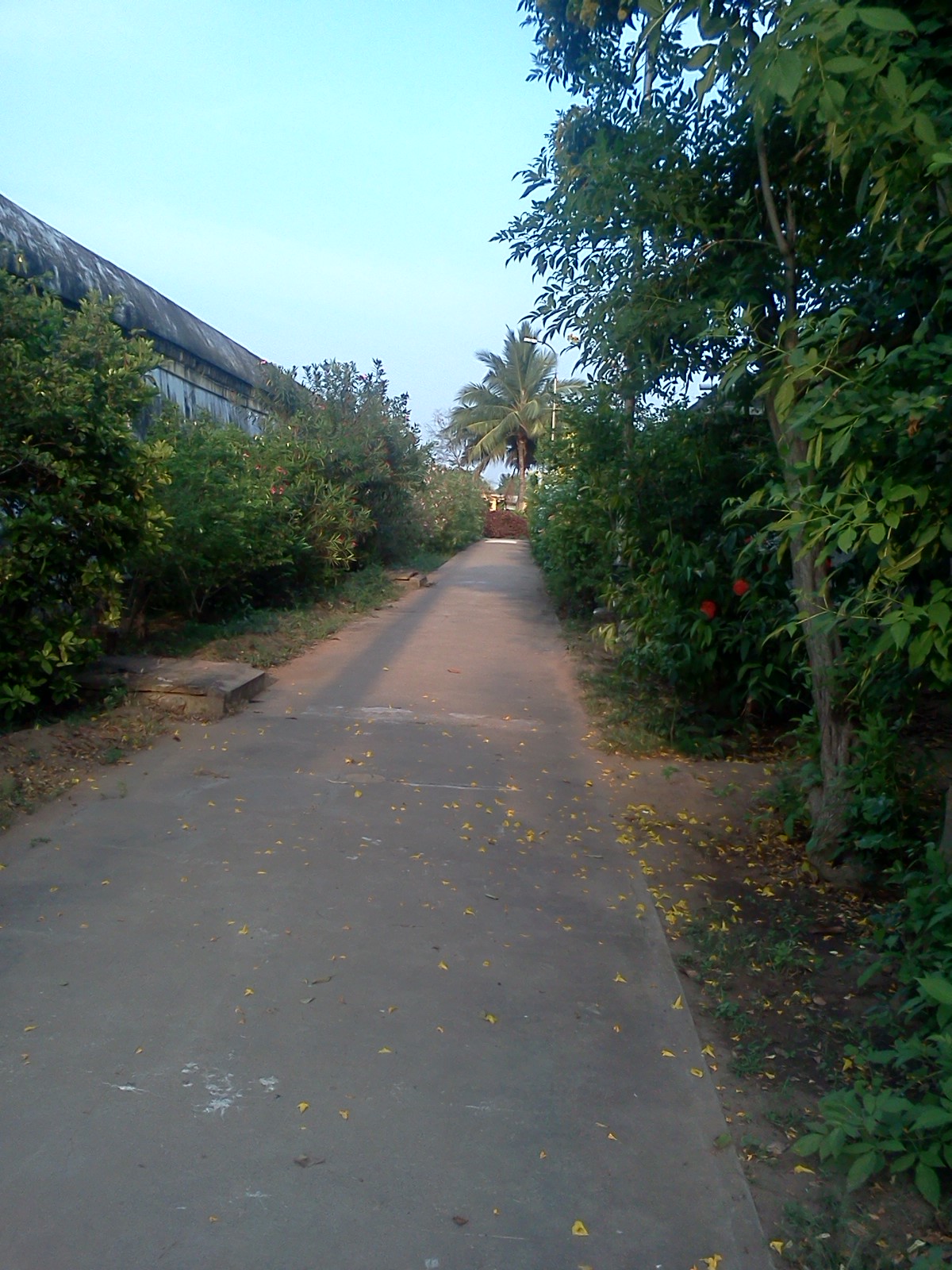
This Perungalur is a peaceful village in Pudukottai Taluk/District of Tamilnadu situated about 18 KM from Pudukottai on the Tanjore - Pudukottai highway,  nearby runs a small river 'Agniyaru'.  The temples in this small town are worshipped as their 'Family Deity' (குல தெய்வம்) by many Hindus.  We joined in a Spiritual Tour along with my relatives family to Perungalur to perform their Family Deity Prarthana (குலதெய்வ வழிபாடு) at the temple for Lord Siva Sri Vamsodhdharakar" and his consort Sri Mangalambigai.  

In general, it is a well known custom in a hindu family to perform Family Deity Prarthana to fulfil their vows on completion of a good (Subha Mangalam)  happening in the family, even some people offer to tonsure their head as a mark of their prarthana to their family deity. 

இந்த ஸ்தலத்தை மையமாகக்  கொண்டு நடந்த ஒரு பின் நிகழ்வு  -

தஞ்சையை  ஆண்ட சோழ சாம்ராஜ்யத்தின் மூன்றாவது குலோத்துங்க சோழன் தன் வம்சம் வளர  பிள்ளை வரம் வேண்டி சிவ பெருமானைப்  பிரார்த்திக்கிறான். அவனுடைய பிரார்த்தனைக்கிணங்க, எம்பெருமானார் இரண்டு சிவ லிங்கங்களை கிழக்கொன்றும் மேற்கொன்றுமாகப்  பிரதிஷ்டை செய்து அதனைப் பிரார்த்திக்கு மாறு கோருகிறார்.  மேற்கு பார்த்து  வைத்த சிவலிங்கம் இருப்பது  இந்த பெருங்களூர். காலப் போக்கில் மன்னருக்கு குழந்தை பாக்கியம்  கிட்டவும்  அவனது வம்சம் வளர்ந்து சாம்ராஜ்யதாரகம்  தழைக்கவும் அடிகோலியது  இந்த ஸ்தலம்.    ஆகவே, இங்கு வீற்றிருக்கும் எம்பெருமானார்  "வம்சோதாரகர்"  என அழைக்கப்படுகிறார் என்பது  ஒரு கூற்று ..!!!  இதனைப்  பின்னணியாகக் கொண்டு, குழந்தை பாக்கியம் வேண்டுவோர் எம்பெருமானைத் தரிசித்துத்  துதிக்க வேண்டிய வரம் கிட்ட அருள் பாலிக்கும் இத்தலம் என்பது மற்றுமோர் கூற்று ...!!!

வம்சா(குல) வழி  மரபிற்கிணங்க  நடத்தும் வழிபாடுகள் தொடரப்பட்டு  வருவதை இன்றும்  காணலாம் இங்கு..

மேற்குப்  பகுதியில் அமைந்த அகண்டு விரிந்த குளம் காண்பதிற்கு ஒரு ரம்மியமான காட்சியாகும். அமைதியான சுற்றுப்புறம், பரந்துவிரிந்து விருட்சமாக காட்சி தரும் அரச மரம், மிதந்து வரும் குளிர்ந்த காற்று, அதனின்று எழும் இலை சல சலப்பு, பசுமை போர்த்திய கரை மருங்கு, பட்சிகளின்  ரீங்காரம்,  தெள்ள தெளிவென நீர்ப்பரப்பு, அருகே  அமைதியாய்  அருள் பாலிக்கும் "வம்சோதாரகர்"  - எடுத்தேனே  இப்பிறவி இங்கிதனைக்  காண...!!!


கோயில்  அருகில் குளம் 


ரம்மியமான கோயில் குளக் காட்சி


Devotees are first to take bath in the pond and with their wet dress, to have proceed for darshan at the Sri Vannimara Pillaiyar temple and to complete their prarthana offerings.  After doing alankaram, prayers, neivedthyam, harathi etc. three handful of paddy grains are offered to the deity along with a rupee coin by everybody.


ஸ்ரீவன்னிமர பிள்ளையார்  கோயில்  


ஸ்ரீ வன்னிமர பிள்ளையார் 


சன்னதியில் ஒரு வழிபாடு 
Then, they will proceed to the other side pillaiyar temple ("Sri Khshema Pillayar Temple"). There also the devotees are required to take bath from the water fetched from another pond nearby by the poojari.   Only three pots of water will be poured on the devotees head.  After bath, only here the devotees are permitted to change their wet cloths. Then, offerings, prarthana neivedhyam, harathi  etc. will be performed by the poojari and the darshan will be completed.   


ஸ்ரீ ஷேம பிள்ளையார் கோயிலும் குளமும் 


ஸ்ரீ ஷேம பிள்ளையார் சன்னதி  
Next, the devotees will go to the Sri Urumanathar Temple (an Ayyanar temple) which is very closeby.  In this temple, ladies are not allowed after certain distance from the sannadhi.  Only gents can go near the sannadhi and do offerings and prayer.  
    

ஸ்ரீ உருமநாதர் கோயில்


ஸ்ரீ உருமநாதர்  சன்னதி 

Lastly, the devotees will enter Sri Vamsodharagar temple to have darshan of Lord Siva and his consort Sri Mangalaambigai.  Here, ladies will do 'Mavilakku Mavu' offering according to their vow, in front of Sri Mangalaambigai sannadhi.  This ritual is a very sacred and sanctified and they will do with their full devotion before the deity.  


                                                                     கோயில் நுழை வாயில்

கோபுரத்தின்  மற்றுமொரு காட்சி  (உட்புறமிருந்து )


சன்னதியின் இடப்புற  துவாரபாலகர் 

சன்னதியின் வலப்புற துவாரபாலகர் 

ஸ்ரீ வம்சோதாரகர் 
The main deity Sri Vamsodharagar is in the form a Linga facing west.


ஸ்ரீ மங்களாம்பிகை கோயில் 
Goddess Sri Mangalambigai is facing south in this temple.


ஸ்ரீ மங்களாம்பிகை சன்னதி 

அம்மன் சன்னதி  அலங்கரிப்பு 

அம்மன் சன்னதி  அலங்கரிப்பு 

There is another temple for Lord Ayyappan in the name of  'Sri Malayamarungar' considered to be a powerful god.  The poojaris who perform pooja in this temple are called 'படிமத்தார் ' . 


ஸ்ரீ மலையமருங்கர்  கோயில் 

                                                                                    ஸ்ரீ மலயமருங்கர் சன்னதி 


ஸ்ரீ துர்க்கை அம்மன்  சன்னதி 

Separate sannadhis are there for Lord Murugar, Dakshinamoorthy, Chandikeswarar and Bhairavar.


and.. a child's play at the end.

குழந்தையும்  குதிரை வாகனமும் ...


வழிபாடுகளைனைத்தும் இனிதே நடந்தேற எம்பெருமானார்  இன்னருள் இறைஞ்சி 
இனிய நினைவலைகளுடன் இல்லம் திரும்பினோம்.


வணக்கம் 


Tuesday, 14 May 2013

Visit to Rameswaram Temple

My Spiritual Travelogue


Arulmigu Sri Ramanathaswami Temple - Rameshwaram


We planned our visit to Rameshwaram keeping in mind to perform our pithru rites during Mahalaya Paksha period (Sept. 2012) at Rameshwaram, combining with our longer wish to fullfil - to have  darshan of Shri Ramanatha swamy at Rameshwaram. 


From Chennai, we started off by train to Madurai where we landed at about 8.00 p.m.  Due to some track work, the journey was terminated at Koodal Nagar instead of Madurai Junction.  On alighting from the train, we were greeted by heavy drizzling and was wading through the same to reach Madurai junction railway station where Rameshwaram passenger train leaving at midnight.  Added to the our owe, Madurai junction railway station was in pitch dark due to power failure.  Somehow, we managed to get into our train which left after a delay of 40 mts from its scheduled departure.  The journey was a little bit husky.  We landed at Rameshwaram station on the following morning at about 4.30 a.m.   


The early morning cool sea breeze kindled our spirits from the sleepy mood and set sail our enthu to the day's active schedule.  We checked-in to a lodge,  dumped our baggages and taking the advise of the inn-keeper, we proceeded to Shri Ramanathaswamy temple to have 'spadiga linga pooja' darshan.  This darshan in the early morning before sunrise is said to be a gifted opportunity for the pilgrims.  Chanting of the powerful mantra 'Om NamaShivaya' and of having the 'spadiga linga'  darshan in that early morning spiritually took us to a heavenly abode.   There is a belief that the 'spadiga lingam' was given by Sankaracharya to this temple. 


Morning Beach at Rameshwaram


The Lodge where we stayed

Next, we engaged a prohit and jeeps for visiting Dhanushkodi to perform our Theertha srartham or Hiranya srartham.  The prohit had lined up all paraphernelia for the pooja and in two jeeps lead us to Dhanuskodi where we have to perform our rites at the confluence of Mahodadhi (Bay of Bengal) and Ratnakara (Indian Ocean).  


Dhannushkodi is a town in the southern tip of south India.  There is no proper road to Dhanushkodi.  The stretch is through beach sand.  No ordinary vehicle can travel in this sand dunes beach.  There are lot of special small trucks available to travel to Dhanushkodi. 


Mini tucks & Jeeps in the sand dunes


It is a journey, unimaginable to many, even for us till that moment,  to be at the very southern end (tip) of India, but a realistic one for us.  Emotionally, we were all speechless on seeing the vast roaring sea around our visinity, engulfed with the golden sun rays from the eastern horizan, twinkling waves through the golden rays.  Oh, what a marvellous sight gifted by nature.   With rapt attention, we stood motionless,  enjoying the nature's beauty.  But, for a sudden thud by our prohit,  we would not have been back to realism.  He was preparing for our doing the sankalpam and prayers on the sands of Dhanushkodi sea shore.  He drew bows and arrows for each one of our families on the sand for performing our theertha srartham.  He arranged everything so professionally and we did the rituals as per his command.  Then, we were asked to take 30 snan dips in the sea.  After this, we all straight away proceeded to Sri Ramanatha Swamy temple without changing the wet cloth.


Ramanathaswamy temple is the most important temple at Rameswaram.  The temple is so constructed inside a compound wall of more than one kilometre, houses four marvelous corridors which have been beautifully carved or sculptured.   It is said that the holy water of the divine water tanks inside the temple compound have tremendous powers to the pilgrims / visitors.   The ponds inside the temple corridor have their own significance in belief and faith.  temple corridor one can   visit here is the longest in India.


The Legend related to the temple goes like this -  on the advice of Rishis, Lord Rama along with Sita and Lakshmana, installed and worshipped the Sivalinga here to expiate the sin of Brahmahatya - killing of a Brahmin – Ravana while returning to Ayodhya. Rama wanted to do the Sivalinga installation at an auspicious time.  He sent Hanuman to Mount Kailas to get a Sivalinga.  Since Hanuman could not return with the Sivalinga in time before the auspicious time goes,  Sita herself made a Lingam (Ramalingam) out of sand.  The rituals were performed and after that Hanuman returned with a Linga from Mount Kailas.  To appease the disappointed Hanuman, Rama had Anjaneya’s Lingam - Visvalingam  also installed by the side of Ramalinga, and ordained that rituals be performed first to the Visvalingam. This Visvalingam is just around the Prakaram of Hanuman temple.


                                                         Sri Ramanatha Swamy Temple


Architectural marvel - Temple corridors


The temple ponds inside the temple corridor have their own significance in faith. The concept is that just before purifying the soul inside the temple, one can purify the body in these “theerthams” or holy ponds.  There are almost 36 Theerthams here in Rameshwaram, out of which 22 are in the temple.  The water of these Theerthams are said to be therapeutic. A bath in these is regarded significant.  The name of 22 Theerthams are -

Sethumadava Theertham,
Gayathri Theertham,
Saraswathy Theertham,
Maha lakshmi Theertham,
Savithri Theertham,
Gandhamadava Theertham,
Gavaksha Theertham,
Yamuna Theertham,
Gaya Theertham,
Siva Theertham,
Satyamrita Theertham,
Sarva Theertham,
Kodi Theertham,
Gavaya Theertham,
Nala Theertham,
Neela Theertham,
Sanku Theertham,
Chakra Theertham,
Brahmahatta vimochana Theertham,
Soorya Theertham,
Chandra Theertham,
Ganga Theertham


Gavaya Theertham
Yamuna Theertham


Suriya Theertham

Sanku Theertham

After taking  bath in all the 22 theerthams inside the temple, we went back to our prohit's place for performing our Mahalaya Paksha Tarpan which he arranged.  After performing the Tarpan, we had darshan of Sri Ramanatha Swamy and his consort goddess Sri Parvathavarthini.  The prohit also made arrangements for our lunch.  After having a sumptuous lunch, we were getting ourselves ready for our return journey by evening.  We reached Rameshwaram railway station and our return train was waiting at the platform.  


We all wanted to have look on the Pamban Bridge which connects Rameshwaram on Pamban Island to mainland India.  We could not have a look on the Pamban bridge in the night when we were ravelling to Rameshwaram as it was mid-night and pitch dark everywhere.  So, we made it  point to have good look on the Pamban Bridge on our return  from Rameshwaram.


During the British Raj period, in late 1870, when East India Company was expanding its trade, a need arose for a rail link between Danushkodi and Colombo. Under the Indo-Ceylon Project, two proposals - i) rail bridge from Mandapam to Pamban and ii) from Danushkodi to Thalaimannar were sent to the British Parliament.  The Mandapam - Danushkodi rail link project got approved by the British Parliament at a cost Rs. 70 Lakhs.  South Indian Railway commenced the bridge construction in 1902. Work was smooth till constructing 112th pier from Mandapam side.  At this stage, it was decided to allow ferry service as well. A German Engineer Scherzer designed and built the famous 65.23 metre long rolling type lift span which opens up to pave way for the vessels to pass through.  After the erection of rolling lift centre span in 1913, the bridge was thrown open to traffic in Feb. 24, 1914 and recently, the bridge has completed its centenary year.  The bridge with stood nature's fury in December 1964.  The then President A.P.J. Abdul Kalam, who hailed from Rameswaram island suggested for gauge conversion of the rail track and the same was completed in 2007.  The bridge was further strengthened in 2009 for movement of goods traffic.  Recently, it suffered a jolt, when a barge which was drifting due to its anchor failure, crashed into the bridge, damaging the 121st pier.  The same was rectified within a weeks' time and the train service was restored.   


The Pamban Bridge is a cantilever bridge on the Palk Strait connects Rameshwaram on Pamban Island to mainland.  There is a road bridge passes through adjacent to the cantilever railway bridge. It was India's first sea bridge.  It is the second longest sea bridge in India (after Bandra-Worli Sea Link) at a length of about 2.3 KM.  The rail bridge is a conventional bridge resting on concrete piers, but has a double leaf bascule section midway which can be raised to let ships and barges pass through.  It is a magnificient sight for the eyes to view the cantilever railway bridge and the road bridge side by side in the mid sea in that evening sunset light.  


An engineering marvel - Pamban bridge

Pamban bridge


With these sweet memories we returned to our base the next day morning and got mixed up with our daily chores. In that way, we were all very much gracefully blessed by the divine powers of Sri Ramanatha Swami of Rameshwaram in making our spiritual pilgrimage a very successful one both in spirits and health and kindled our enthusiasm for more and more such  spiritual yatras.       


வணக்கம் 


Saturday, 27 April 2013

My Spiritual Travelogue - Thirukkarugavur


My Spiritual Travelogue


Sri Garparakshambigai Amman Temple Darshan - Thirukkarugavur


Recently, we visited Thirukkarugavur for darshan of Sri Mullaivananatha Swami and Sri Karparakshambigai Amman Temple in Thirukkarugavur.

This small town - Thirukkarugavur is situated in Tanjore District of South India within a distance of 6 KM from Papanasam, in between Tanjore and Kumbakonam Main Road, on the banks of river 'Vettar'.  Public transport facilities are available to this temple town from Kumbakonam and Tanjore.   Also autorickshaws are available from Papanasam.  This temple town is also known  by other names viz.  - 'Madhavi Vanam', 'Mullai Vanam Thirukkarugavur', 'Garppapuri'.

The temple is  460' in length and 284' in breadth.    The Rajagopuram is in the eastern side and on the south side there is an entrance.  Sri Mullaivananatha Swami sannadhi is situated in the big corridor and on the northern side of it Sri Garpparakshambikai Amman sannadi is there. Both sannadhis have separatre corridors.


Shri Garparakshambigai Amman
                                                   
Greatness of the Goddess Arulmigu Garbarakshambigai

Couples yearning for a child have to come in person to this temple, obtain ghee from the counter, light 11 ghee lamp and must do step smearing (Padi Mezhuguthal) in sacred Ambal Sannadhi and pray for their child. After returning to their home they should buy quality ghee for 1 kg and mix them with the sacred ghee obtained from this temple. Before going to bed couples should take a teaspoonful of the ghee for next 48 days. Women should avoid intake of ghee during their periods, while men should continue without break. We advice the couples to recite the mantras which will be given to them in a book form during their visit to this temple. This is a belief that is backed up by the experience of many.  Persons who are unable to visit this temple in person can obtain blessed ghee from this temple through post or courier. The details are available with the temple authorities who will provide same on  request. 

Blessed castor oil for easy delivery:

Pregnant woman in third trimester has to obtain blessed oil from this temple. It is not necessary for the woman to come in person while her husband or any family member can come and obtain the blessed oil. The oil must be applied in the lower abdomen of the woman during pain. It is advised that the woman to recite the mantras for easy delivery.

Persons who are unable to visit this temple in person can obtain blessed oil from this temple through post or courier. The details available with temple office.  After obtaining the oil follow the procedure as detailed above.

Punugu sattam

Lord Mullaivananthar is Swayambu i.e, self manifested. Therefore no abishegam is done to him. During Valarpirai pradosham days Punugu Abhishegam (Ablution) is done to Shri Mullaivananathar. Punugu is believed to cure incurable and chronic illness. Punugu prasadam can be obtained either in person or through post.

Abishegams are also performed during these timings -  Monday to Thursday: 8.00 a.m. to 4.30 p.m.
Friday, Saturday: 8.00 a.m. only.  Sunday:  No abishegam is performed.  No abishegams are performed in evening on Pradosham days.  Similarly no abishegams are performed during festival days.
Pre-bookings are made for abishegams. Devotees are expected to be present ½ hour before abishegam. Delay causes discomfort to other devotees.  Temple officials are very helpful in providing neccsary details for performing pooja etc. on request. 


The temple has got a beautiful Nandavanam - "Mullai vanam" in outer prahara.  It has got various flowering plants in different varieties and it is a feast to our eyes when the plants in full bloom. 


In front of the temple main entrance on the eastern side, a beautiful temple tank is there.


Thanga Thottil

In the temple, there is a Thanga Thottil (Golden Cradle) being used for completing the prarthana made by the couple for having blessed them with a baby by the graceful blessings of Shri Garparakshambigai. This is something like a unique way of Thanking Goddess Shri Garbarakshambigai for her benevolence towards the couple by blessing them for having a child.  This is known as Thanga Thottil prarthanai.  The couple will place the baby in the Thanga Thottil and circumventing the Amman Praharam (corridor) with their child. 

Thulabharam:

This is an age old tradition which is followed in many temples. Placing your child in one plate of the weighing scale and balancing the other with goods is called Thulabharam. We accept all kinds of materials like Ghee, oil, food grains, fruits, currency coins, gold, silver etc in Thulabaram.


Navakodi Ghee lamps

All auspicious functions commence with the lighting of the lamp, which is often maintained right through the occasion. Light symbolizes knowledge, and darkness - ignorance. The Lord is the "Knowledge Principle" (Chaitanya) who is the source, the enlivener and the illuminator of all knowledge. Hence light is worshiped as the Lord himself.
The traditional ghee lamp has a further spiritual significance. The ghee in the lamp symbolizes our vaasanas or negative tendencies and the wick, the sin. When lit by spiritual knowledge, the vaasanas get slowly exhausted and the sin too finally perishes.
Taking into consideration the traditional belief, for the benefit of devotees we ask you to light up eleven lamps, if you are praying for pregnancy (one for Shri. Vinayagar, one for the Lord Mullaivananathar and nine for Almighty Shri. Garbaratchambigai) and five lamps for easy delivery (one for Shri. Vinayagar, one for the Lord Mullaivananathar and three for Almighty Shri. Garbaratchambigai).
Those who cannot come in person to light ghee lamps can use the temple service to do so. Lighting ghee lamps up to the number of their age is a common occurrence here. The details have been given in payments page of this website.


Ear boring and Tonsure prayers

Ear boring of the child and tonosuring head can be done in this temple. Temple officials will make necessary arrangements on request. 
வாழ்க முல்லைவனநாதரின் பெருமை 
வாழ்க கருக்காத்த நாயகியின் அருள்
வாழ்க சீர் அடியாரெல்லாம்.


வணக்கம்